Landscape is not background
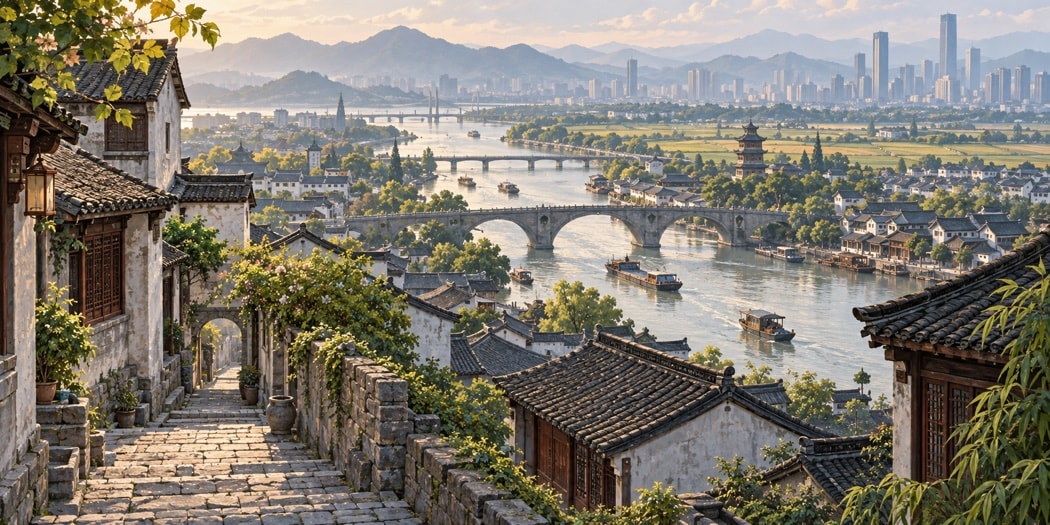
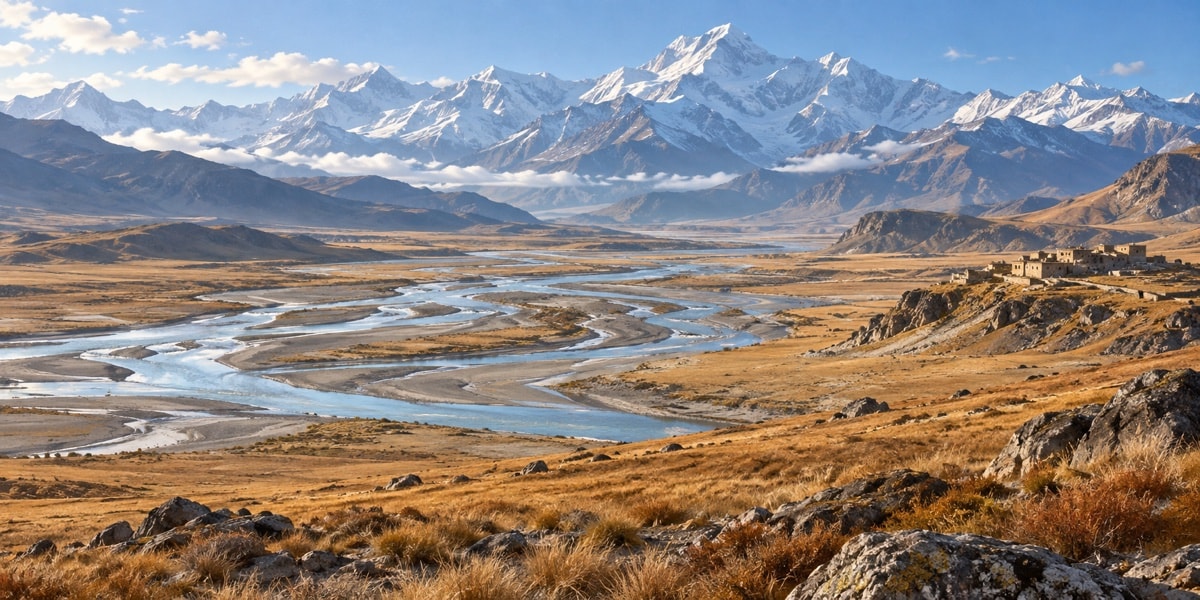
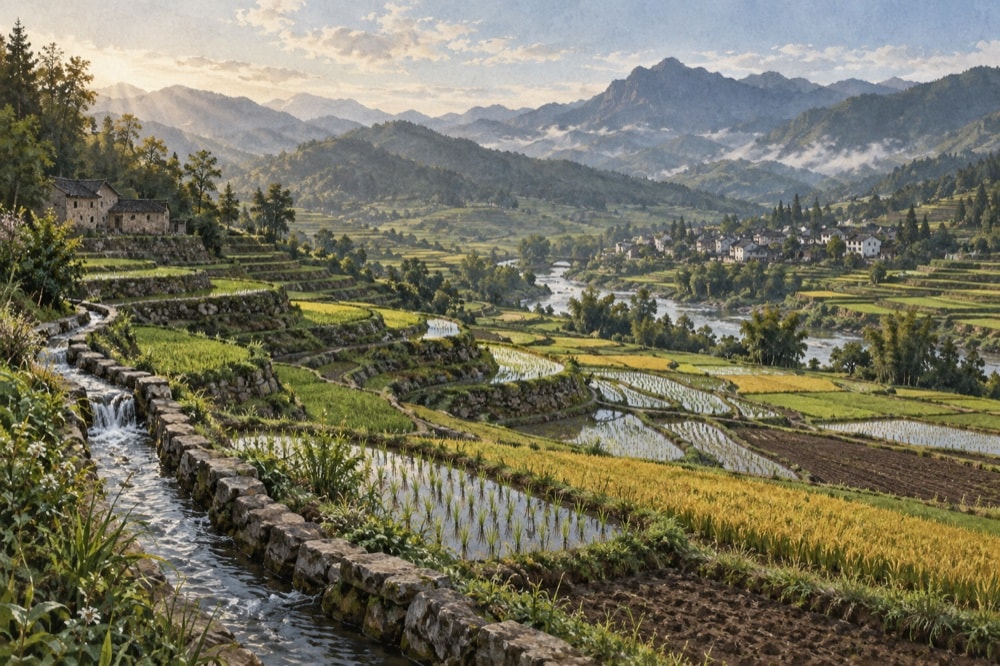
Rivers, plains, mountains, coasts, deserts and plateau environments shape routes, crops, settlement and architecture. The images in this gallery are interpretive rather than documentary views of named places. They are meant to help a reader notice relationships among terrain, water and built form.
A terraced slope records decisions about soil and irrigation. A river city records transport, trade and repeated rebuilding. A high plateau settlement reflects climate and available materials. None of these scenes represents all of China; each is an invitation to read a region more closely.
Objects carry social histories
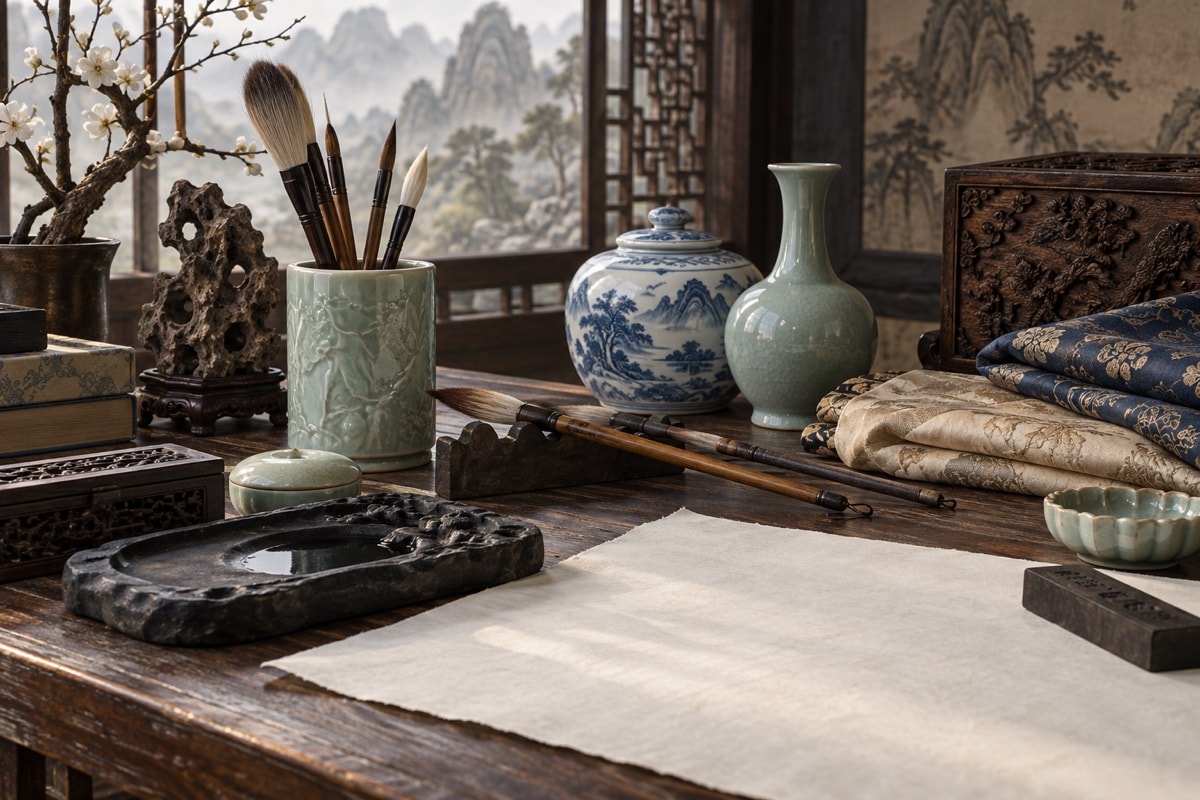
Brushes, inkstones, paper and ceramic vessels often appear as symbols of Chinese culture. Their history is more specific. Materials came from workshops and production centers; forms answered to use; styles moved through courts, markets, households, temples and collections.
Looking at an object means asking who made it, how it was used, what evidence supports its date and how it traveled. A museum catalogue may reveal kiln technology or ownership, while a literary source may explain why a motif mattered to a particular audience.
Against the staged type
Older picture directories often labeled anonymous people as examples of a whole group: a minority, a family, a worker or a national personality. That approach flattens individuals and turns clothing or posture into supposed evidence of character. This gallery avoids it.
The illustrations contain no identifiable people. Instead they focus on landscape, architecture and working materials. The people, minority and agriculture pages supply historical context in prose and point readers toward defined sources rather than visual stereotypes.
Four paths through the collection
Begin with the river-city view to consider layered urban history; move to the plateau for geography and Tibetan culture; follow the terraces into agriculture and rural change; then enter the studio to read calligraphy, painting and ceramics. The same image can connect several sections, and the gallery uses graphics as doorways into related subjects.
Images are most useful when they create better questions. What scale is shown? Is the scene typical or exceptional? Which period does the architecture suggest? What has been left outside the frame? Those questions turn a gallery from decoration into reference.